Nation File
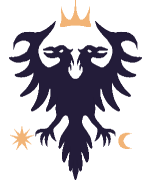
Flag:

Capital: Sargost
Government Type: Dynastic rule
Main Religion: Communion; privately known as The Bloodroot
Quick Links
Culture
Strigavia is an isolated nation, situated in a mountain pass. The culture of the nation is old and rooted in tradition. Outsiders often see it as eerie, closed-off, and difficult to understand.
Religion
Strigavia's religion is publicly called Communion, but among followers it is known as The Bloodroot, though this name is never used openly. Its riturals and practices are kept secret from outsiders.
Government
Strigavia is ruled by ancient noble families whose authority comes from long bloodlines, inheritance, and ancient pacts. Strigavia has an active dynasty that governs the society. Outsiders often criticise this system for being undemocratic. It is 'unknown' how the lower classes of Strigavia view their leaders, as they don't voice their opinions for fear of repercussions.
Relations
Strigavia coexists peacefully with the other nations but remains distant. It trades through Ordan, respects Karsov's role as protector, has some cultural overlap with Besa's folklore and is often seen as blasphemous by Valdoro's religious authorities.
Ordan
Relation: Strained
Strigavia sees Ordan as intrusive, controlling, and tyrannical. They still use Ordan's roads and commerce, but considers Ordan to be disrespectful towards Strigavian customs.
1952 — The Sargost Six
Ordan caught six Strigavians who illegally crossed into its territory. The reasons for this remain unclear.
Strigavia claims the stragglers had no ill intent and called for extradition but Ordan autorities ordered for exceution.
The incident is still remembered as highly controversial and a dark time in history
by both Strigavians and Ordanians.
Karsov
Relation: Good
Strigavia respects Karsov's resilience. The ancient families understand the value of loyalty and sense of duty, even if they disapprove of Karsov's stratocracy.
1896 — The Night of the Broken Gate
A violent force from beyond the north-western opening breached the outer defenses
near Karsov. The invadig forces marched through Strigavia laying waste to their nation,
but Karsovian soldiers quickly regrouped and finally managed to repel the invaders.
Strigavia remembers the event as proof that Karsov has earned its place
as the protectors of the region.
Besa
Relation: Good
Strigavia sees Besa as spiritually closer than other nations. Besan folklore and Strigavian rituals share old roots, though the two nations developed in a different directions over the ages.
Thalor
Relation: Good
Strigavia regards Thalor as wise and spiritually aware. Some Thalorians have specialised in the retrieval of lost artifacts from the ocean. Strigavia has always been a consistent buyer of these goods. This has led to a good relationship between the two nations over the years.
Valdoro
Relation: Poor
Strigavia dislikes Valdoro's religious authority and dogmatic tendencies. Valdoro's priesthood denounces Strigavian occult practices as blasphemous, while Strigavia sees Valdorian religion as a juvenile faith pretending to judge ancient powers it does not understand.
1971 — The Lost Procession
A group of Valdorian missionaries went missing in the northern mountains of Strigavia,
their bodies were found buried under an avalanche.
The Strigavian family that owned the local land treated the bodies according to their own rituals.
When the deceased Valdorian priests were returned to their homeland
the Valdorian church denounced the Strigavian family for blasphemy and demanded a public apology.
Strigavia sided with the family and refused to apologize.